
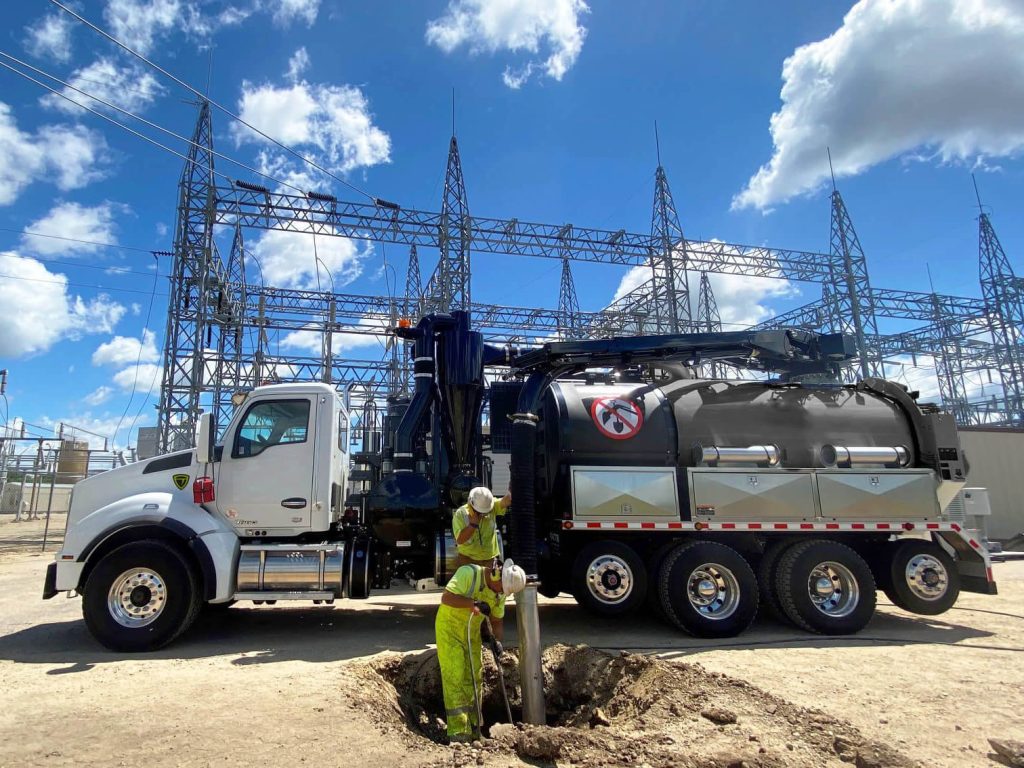
Getting the vacuum excavator size right is the difference between a crew that runs all day and one that spends half its shift driving to a dump site or a hydrant. Too small, and you fill the spoil tank or run dry on water before lunch. Too big, and you are paying for capacity you cannot get into tight job sites. The right size matches your typical hole, your spoil type, your water access, and your access constraints. This guide explains how to size a vacuum excavator, breaking down the specs that matter and showing how TRUVAC and Ring-O-Matic units compare, so crews across California, Nevada, and Arizona can spec the truck that fits their work.
Size a vacuum excavator by balancing four things: debris tank volume for the spoil you dig, fresh water capacity for your run time between fills, blower airflow and water flow for cutting power, and boom reach for the holes you dig. Match those to your access limits and CDL plan.
The Five Specs That Decide Sizing
1. Debris (spoil) tank capacity
The debris body holds the soil and slurry you vacuum out. It is measured in cubic yards or gallons. A larger tank means more digging between dump trips, but it also means a heavier, longer truck. If your spoil is wet and heavy, you may hit your weight limit before the tank is physically full, so payload matters as much as volume.
2. Fresh water capacity
Hydro excavation cuts soil with pressurized water, so your fresh water tank sets how long you dig before refilling. In areas with easy hydrant access, a smaller tank is fine. On remote runs around the Central Valley or the Arizona desert, more water means fewer interruptions.
3. Blower airflow (cfm and inches of mercury)
The blower creates the vacuum that lifts spoil up the hose. Airflow is rated in cubic feet per minute (cfm), and lift is rated in inches of mercury (in-HG). Higher numbers move material faster and from deeper or longer hose runs. Bigger jobs and longer reaches call for stronger blowers.
4. Water pressure and flow (psi and gpm)
Cutting power comes from the combination of pressure (psi) and flow (gpm). Higher flow clears soil faster, while pressure helps cut tougher ground. Matching these to your soil type keeps the dig efficient without over-eroding around the utility.
5. Boom reach and rotation
The boom carries the suction hose and sets how far and how wide you can dig without repositioning the truck. More reach and rotation means fewer truck moves on a spread-out site, which saves real time over a shift.
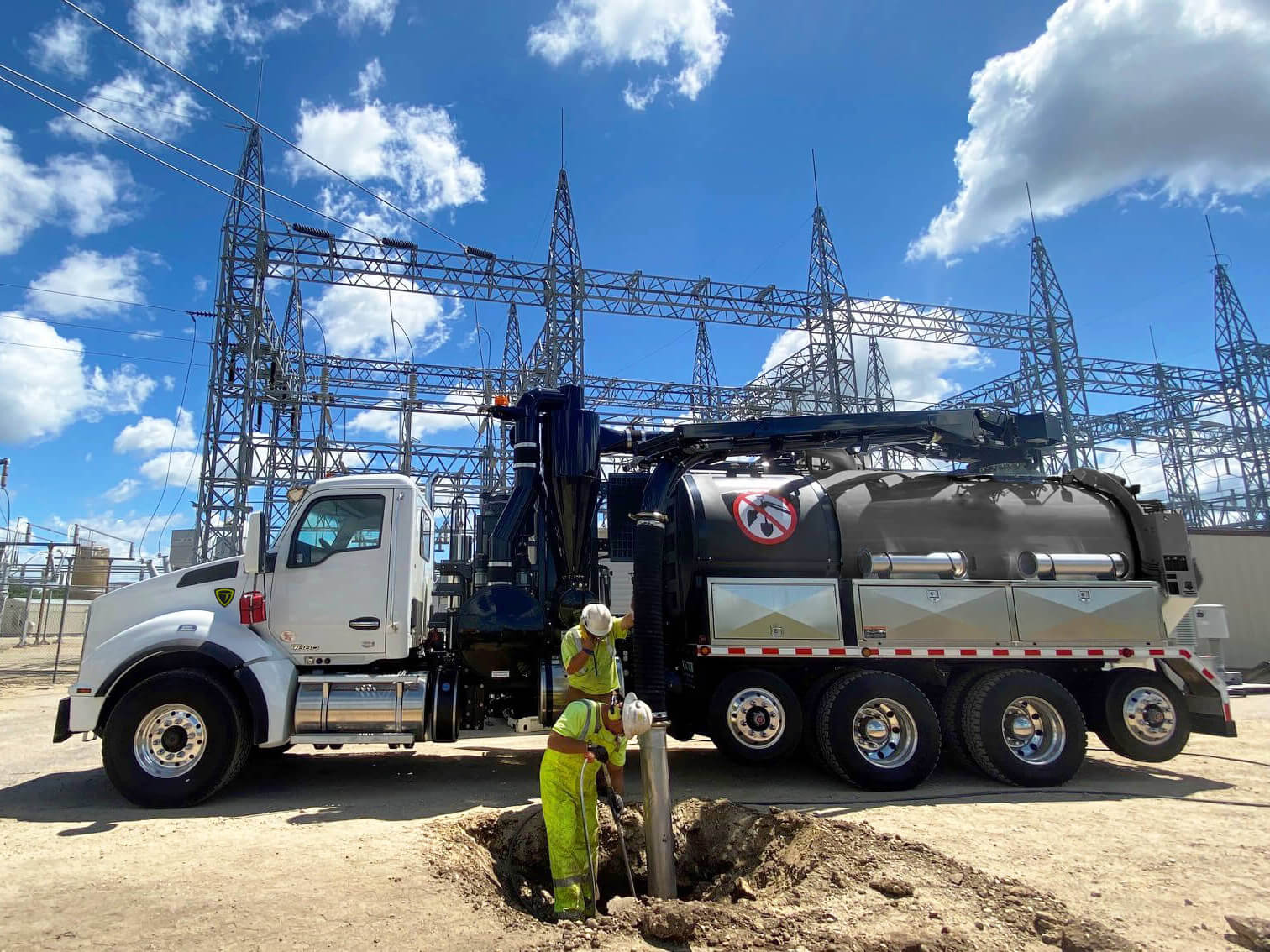
Match the Truck to the Job
Tight urban potholing
If you pothole in dense neighborhoods or downtown corridors in Los Angeles, San Diego, or the Bay Area, access wins over volume. A compact, non-CDL unit like the TRUVAC Paradigm fits where a full-size truck cannot, and more of your crew can legally drive it.
Daily mixed excavation
If you run a variety of jobs each week, a mid-size unit like the TRUVAC FLXX balances payload and maneuverability, with a larger water tank for longer run times.
High-volume and large sites
If you dig big holes, long slot trenches, or work spread-out sites, a full or mid-size HXX gives you the tank, airflow, and 22 foot boom to stay productive between moves.
Trailer flexibility
If you want a unit you can tow behind a pickup for cleanup and potholing, a Ring-O-Matic trailer is compact, non-CDL in its smaller size, and easy to position in tight access.

Spec Comparison: Common Haaker Units
| Unit | Debris | Water | Blower | Water flow | Boom |
|---|---|---|---|---|---|
| TRUVAC Paradigm | 675 gal | 300 gal | 15 in-HG, 2,200 cfm | 8 gpm at 2,500 psi | 14 ft 6 in, 210 deg |
| TRUVAC FLXX / Coyote | 10 yd | 800 gal | (verify) | 10 gpm at 3,000 psi | Extendable / telescopic |
| TRUVAC Full-/Mid-Size HXX | 12 yd | (verify) | 18 to 28 in-HG, up to 5,200 cfm | 10 to 25 gpm | 22 ft, 320 deg |
| Ring-O-Matic 550VX | 550 gal | 200 gal | 1,000 cfm, 15 in | 6 gpm at 3,500 psi | Trailer |
| Ring-O-Matic 850VX | 800 gal | 500 gal | 1,000 cfm, 15 in | 6 gpm at 3,500 psi | Trailer |
Figures summarize Haaker Underground listings in 2026, with a few values marked for verification. Confirm exact specs and payload ratings for any unit you quote.
Do Not Forget Payload and CDL
Two practical limits often decide sizing before tank volume does.
Payload and weight
Wet spoil is heavy. A large debris body can reach legal axle weight limits before it is physically full, especially with mud and slurry. Check the rated payload, not just the tank size, so you do not run overweight on public roads.
CDL versus non-CDL
A non-CDL unit like the Paradigm or the Ring-O-Matic 550VX widens your pool of operators and simplifies scheduling. If keeping crews flexible matters more than raw capacity, that can outweigh a bigger tank. Larger trucks require a CDL operator.
The Water-to-Spoil Balance
A well-sized unit runs out of water and fills its spoil tank at roughly the same time, so neither one forces an early stop. If you constantly refill water but never fill the tank, you may want more water capacity. If you fill the tank with water to spare, a larger debris body or better dewatering may help. Tuning this balance to your typical job is what keeps a crew productive.
Decision Framework: Spec Your Unit
- If access is tight and you want non-CDL operation, choose the TRUVAC Paradigm or Ring-O-Matic 550VX.
- If you run mixed daily excavation, choose the TRUVAC FLXX for payload plus maneuverability.
- If you dig high volume or large sites, choose a full or mid-size HXX for tank, airflow, and reach.
- If water access is limited on your routes, prioritize a larger fresh water tank.
- If your spoil is wet and heavy, prioritize payload rating over raw tank volume.
Frequently Asked Questions
How big a debris tank do I really need?
Size the tank to your typical day so you make at most one or two dump trips per shift. Remember that wet spoil is heavy, so a tank can hit legal weight before it looks full. Match payload to volume, and choose a size that keeps you digging, not driving to a disposal site.
How much fresh water capacity is enough?
It depends on hydrant access. With easy refills nearby, 200 to 300 gallons may be plenty. On remote routes around the Central Valley or Arizona desert, larger tanks of 800 gallons or more cut downtime. Aim to run a normal job without an unplanned water stop.
What blower airflow should I look for?
Higher cfm and inches of mercury move spoil faster and handle longer or deeper hose runs. Compact units around 1,000 to 2,200 cfm suit potholing, while full-size trucks at 5,000 cfm or more handle big, deep, high-volume digging. Match airflow to your typical depth and hose length.
Does a bigger truck always dig faster?
Not on tight sites. A large truck with strong airflow digs fast in open ground, but if it cannot reach the hole or fit the street, you lose time repositioning. On congested urban work, a compact unit with good boom reach often beats a bigger truck on real productivity.
Can Haaker Underground help me spec the right size?
Yes. Haaker Underground reviews your typical jobs, soil, water access, and access limits, then recommends a unit and offers a free on-site demo. Testing a model on your own ground is the surest way to confirm the size before you rent or buy.
The Bottom Line
Sizing a vacuum excavator is a balancing act across five specs: debris capacity, fresh water, blower airflow, water pressure and flow, and boom reach, all bounded by payload and your CDL plan. Start from your typical hole, your spoil type, and your access, then choose the smallest unit that keeps your crew digging rather than driving. Get that balance right and the truck pays you back every shift.
Why Spec Your Vacuum Excavator With Haaker Underground
For more than four decades, Haaker Underground has helped contractors and municipalities across California, Nevada, and Arizona match the right vacuum excavator to the work. We carry the full TRUVAC lineup plus Ring-O-Matic trailers, and our techs help you size for your soil, your water access, and your crew.
Explore our TRUVAC vacuum excavators, or talk to the branch nearest you: La Verne HQ (909) 598-2706, Inland Empire / Colton (909) 370-2100, Northern CA / Hayward (510) 514-0043, San Diego / Santee (619) 569-1946, Central Valley / Tulare (559) 220-8897, Las Vegas (702) 639-0156, and Phoenix (602) 266-8214. Want a unit sized to your jobs? Contact us for a free demo.